The technological evolution occurring across all sectors opens up a range of opportunities for social, professional, and human development. It is undeniable that daily life becomes much more productive with these advancements.
However, the same door of opportunities also opens to cyber risks, something that has been keeping managers from various companies around the world awake at night.
To prevent these advancements from turning into traps, it is crucial to have control over the risks by assessing vulnerabilities, mitigating them, responding to incidents, and recovering in a way that minimizes any impacts.
Managing this cycle may seem very complex, but that’s where the NIST Cybersecurity Framework comes in. As the name suggests, it is a methodology that, when followed, helps ensure comprehensive management of cybersecurity.
What is the NIST Framework?
The NIST Cybersecurity Framework was developed by a federal government agency in the United States, NIST.
NIST's mission is to promote innovation and industrial competitiveness in the U.S. through advancements in measurement science, standards, and technology to enhance economic security and improve our quality of life.
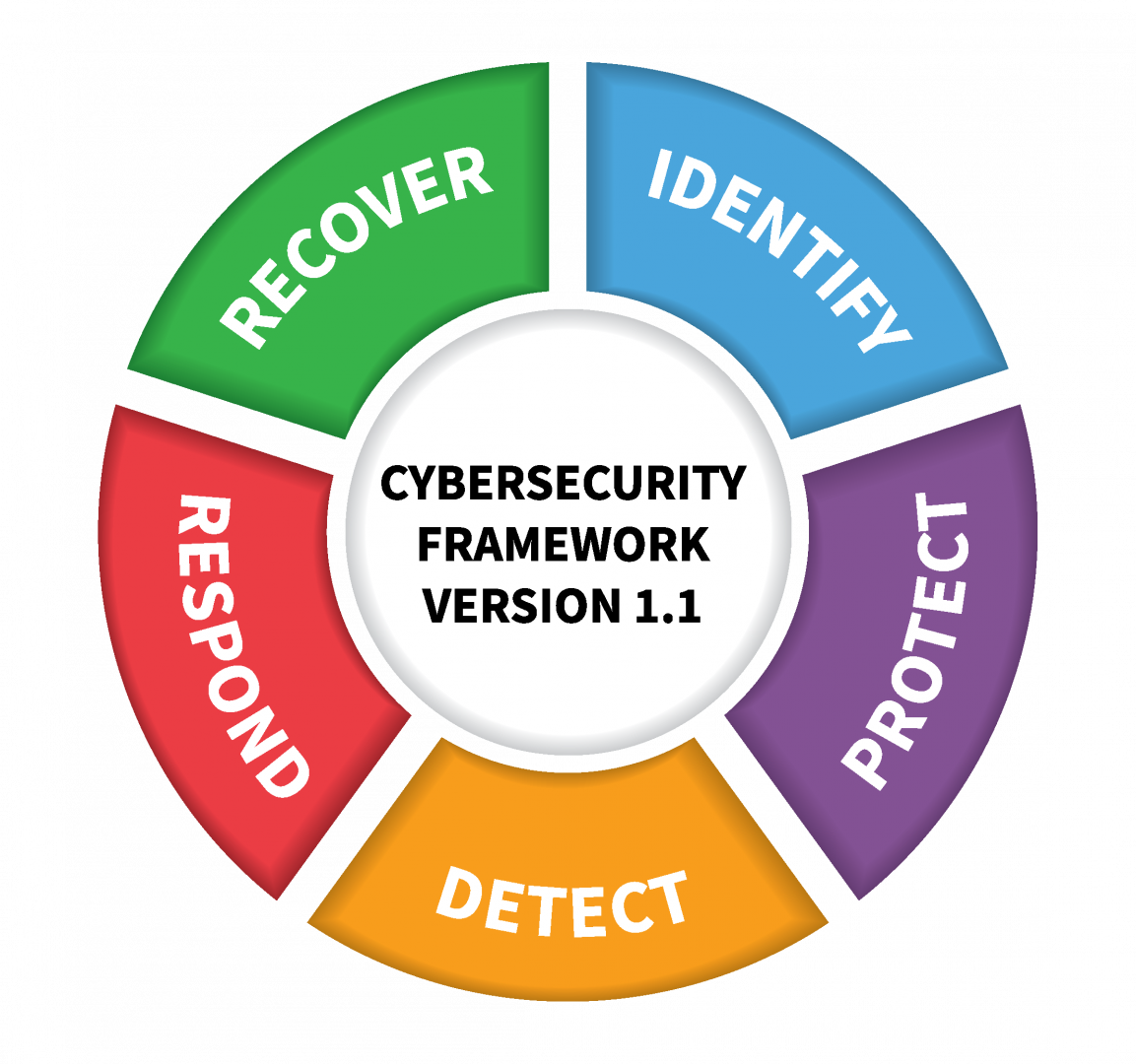
The framework is divided into five main functions, encompassing 23 categories and 108 subcategories with various guidelines for creating or improving a cybersecurity program.
These guidelines reference other established standards such as cybersecurity frameworks like ISO 27001, COBIT, ISA-62443, and the CCS CSC, among others. Additionally, it is updated and evolves as its foundational standards and technology progress.
As a result, the NIST Cybersecurity Framework is widely used worldwide to adhere to quality standards in cybersecurity.
This is one of the methodologies/frameworks that HackerSec employs in its pentesting services for companies.
What are the 5 Functions of the NIST Cybersecurity Framework?
As we know, the NIST Cybersecurity Framework is a cyclical methodology, meaning its functions are interconnected to ensure continuous improvement in managing cyber risks. Let’s discuss each of its functions:
Identify
This function aims at two objectives. The first is to understand the organization concerning its market landscape, assets, and resources. The second is to identify information security risks related to systems, people, assets, data, and any other resources based on this understanding.
Protect
Once the risks to the organization are identified, the protect function involves mitigating these risks—either by reducing the likelihood of an incident occurring or minimizing the impact if an incident does occur. The goal is to ensure the availability, integrity, and authenticity of information.
Detect
This function aims to establish a framework of activities or technologies to identify security incidents as quickly as possible. This is crucial because the sooner an incident is detected, the lesser its impact will be.
Respond
In a scenario where a security incident occurs, this function outlines the activities that should be undertaken to reduce impacts regardless of their category.
Recover
This function focuses on restoring any services or activities affected by the incident and understanding the factors that led to its occurrence. This is vital for the organization's resilience.
Once recovery or risk mitigation is achieved, a new identification phase begins, thus continuing the entire cycle.
Cybersecurity is an endless cycle in both private and public organizations; NIST is an excellent tool to assist in this journey.
To learn more, we recommend reading the official documentation: https://www.nist.gov/cyberframework